The sample is delivered through a dedicated liquid jet sample rod. This rod typically utilizes a glass capillary (nozzle) to create a continuous micro-jet of the liquid into the vacuum. The liquid supply line is connected to the HPLC pump and keep constant flow. Typical flow rate is 0.6-1.0 ml/min.
Liquid jet nozzole is consists of a glass capillary (OD 375um, ID 30,40, 50um), 1/16 inch PEEK Tube, and Swagelok union connector. The holder for holding the liquid jet nozzle is made by a 3D printer, and designed to mount on the rod we have at Veritas beamline.
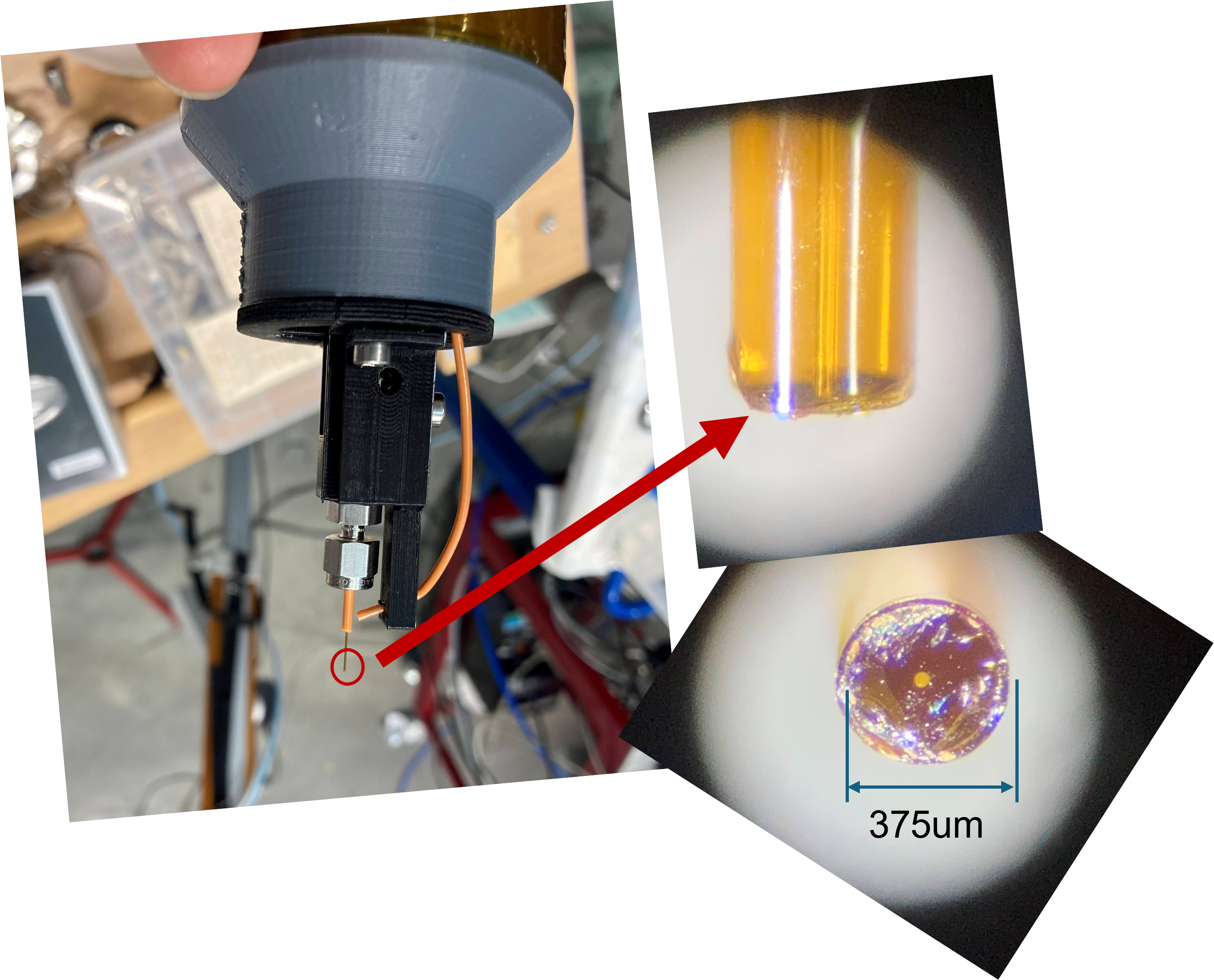 {width=600px}
How to excahnge glass capillary of a jet nozzle
Since the glass capillary is just clamped by Swagelok, it is possible to replace the capillary by untightening the Swagelok nut.
First, remove the old capillary and insert a new one. Tighten the nut a bit. If the capillary is still moving after tightening, you can gradually turn the nut till capillary is holding well.
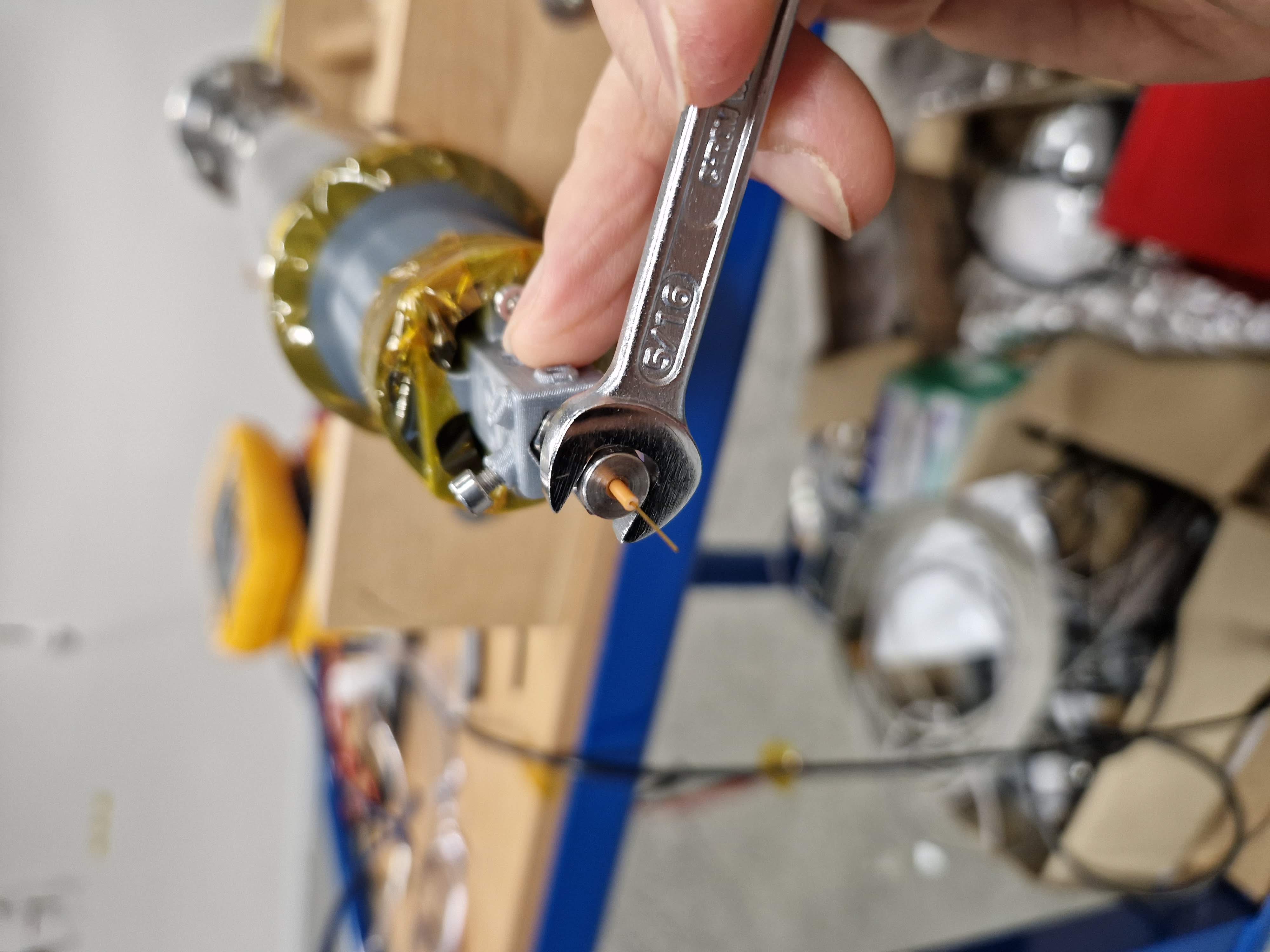 {width=300px}
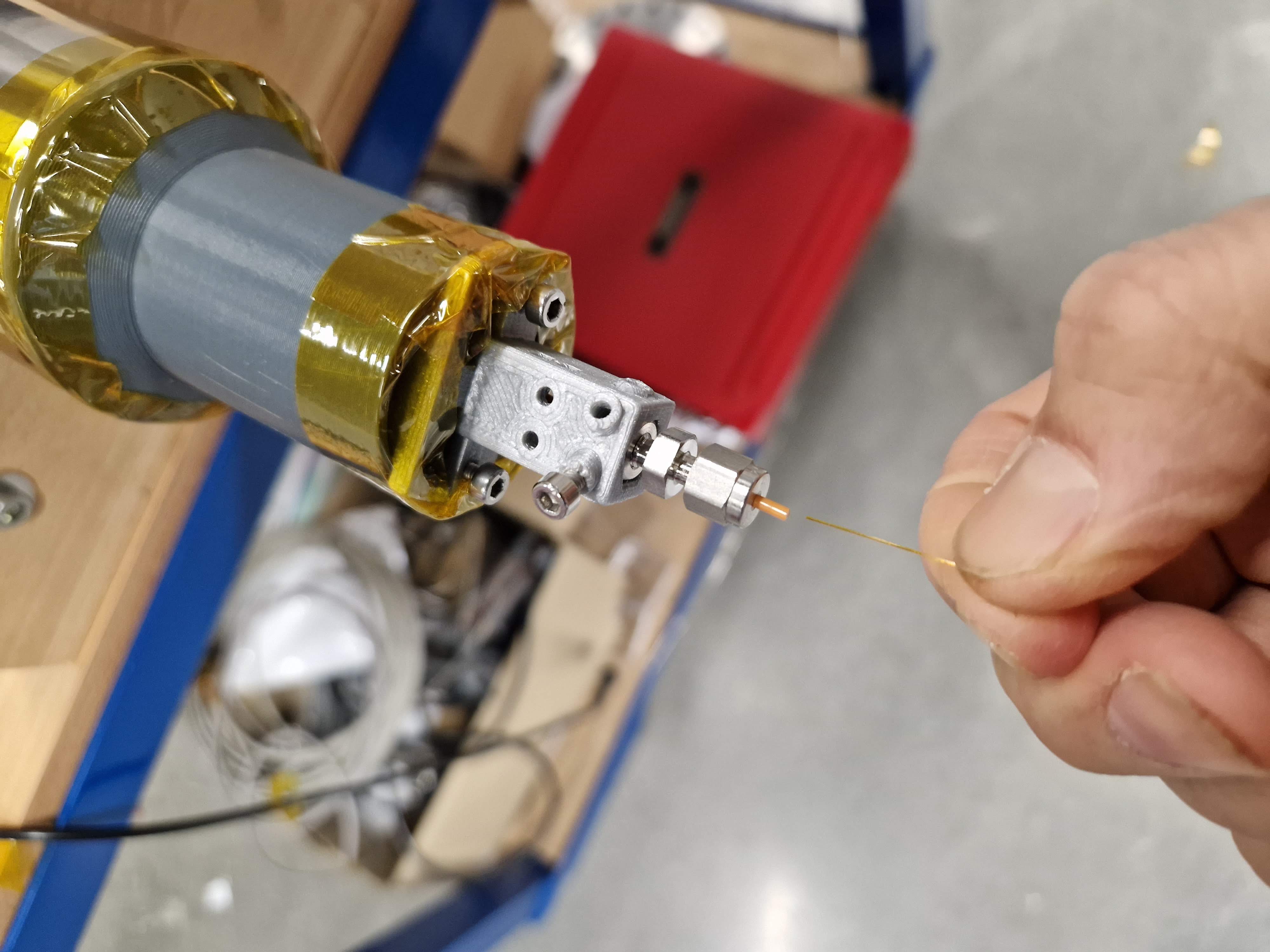 {width=300px}
How to make a jet nozzle
Cut glass capillary and PEEK tube(1/16)
Cut PEEK tube by tube cutter, and cut glass capillary with ceramic tube cutter (which is like cramic plate)
The glass capillary should be longer than the PEEK tube to prevent clogging by particles in the tube.
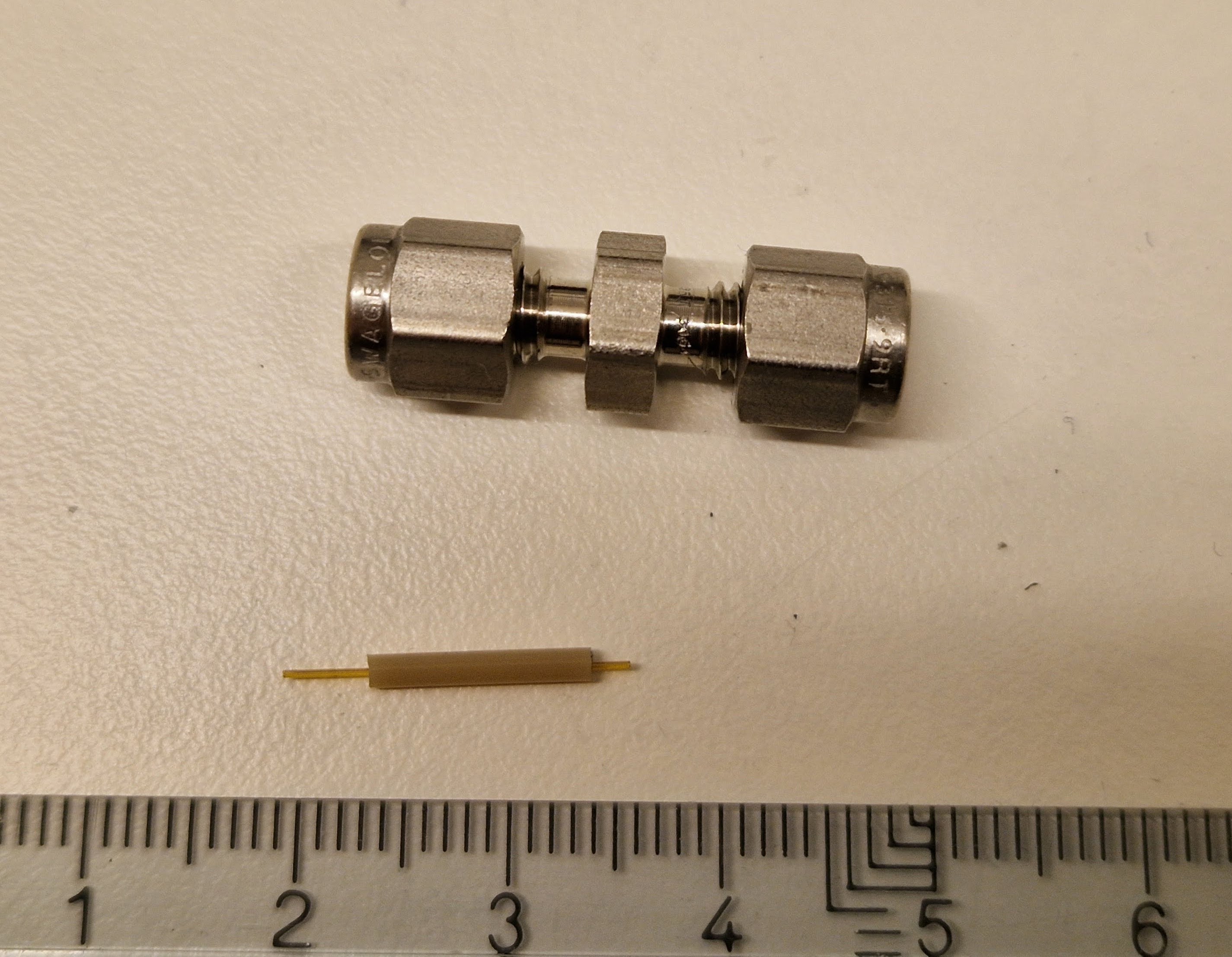 {width=300px}
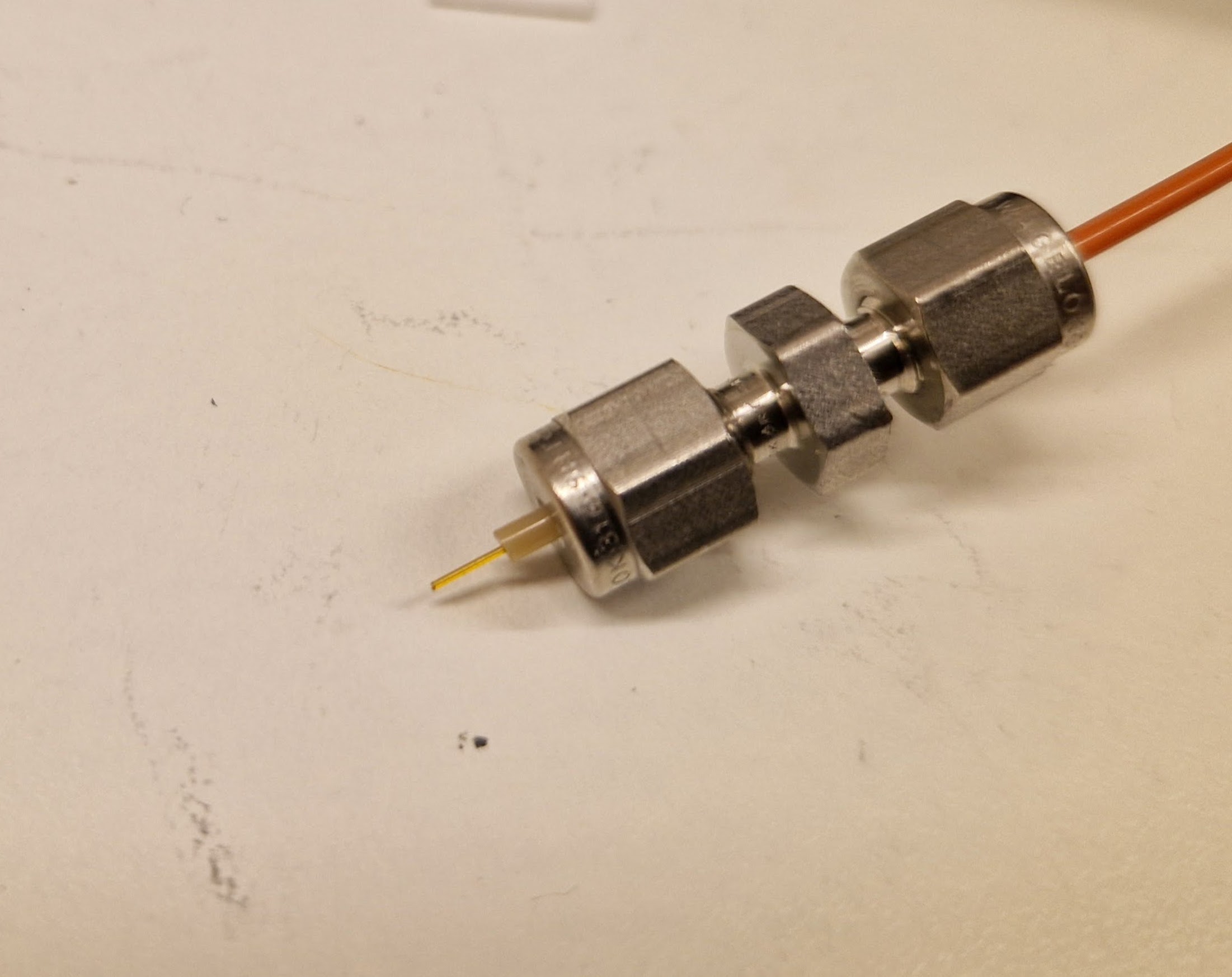
Insert them into a Swagelok union connector
Put the PEEK tube into the Swagelok and insert the glass capillary. Toghten Swagelok. 3/4 turn. It is different from a larger size Swagelok, like 1/4. Do not over-tighten.
If the capillary is still moving after tightening, you can gradually turn the nut till capillary is holding well.
 {width=300px}
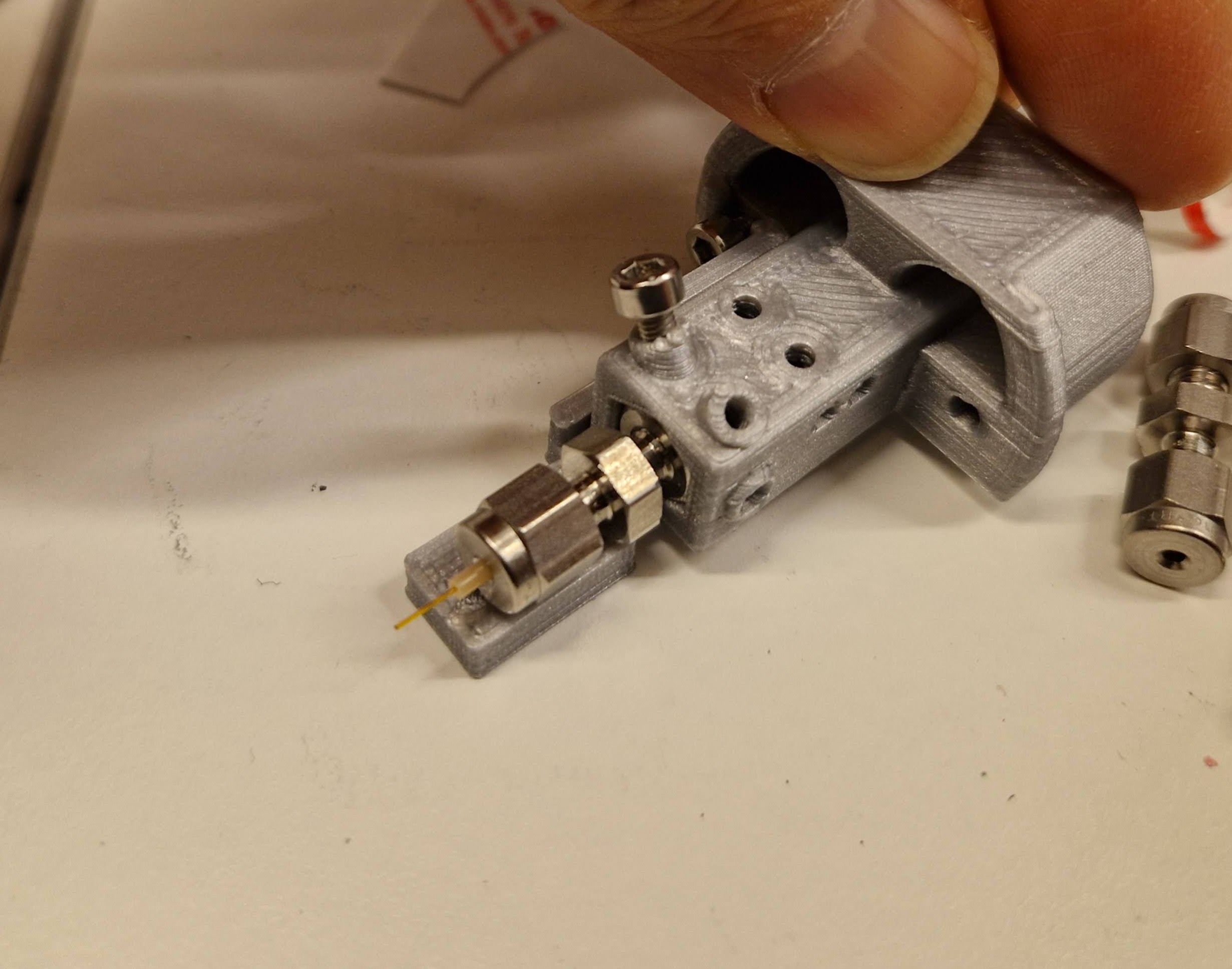
install 3D printed nozzle holder
Insert the nozzle holder into the rod tip, where the 3D printed size exchanger is premounted, and tape the setup with Kapton tape.
 {width=300px}
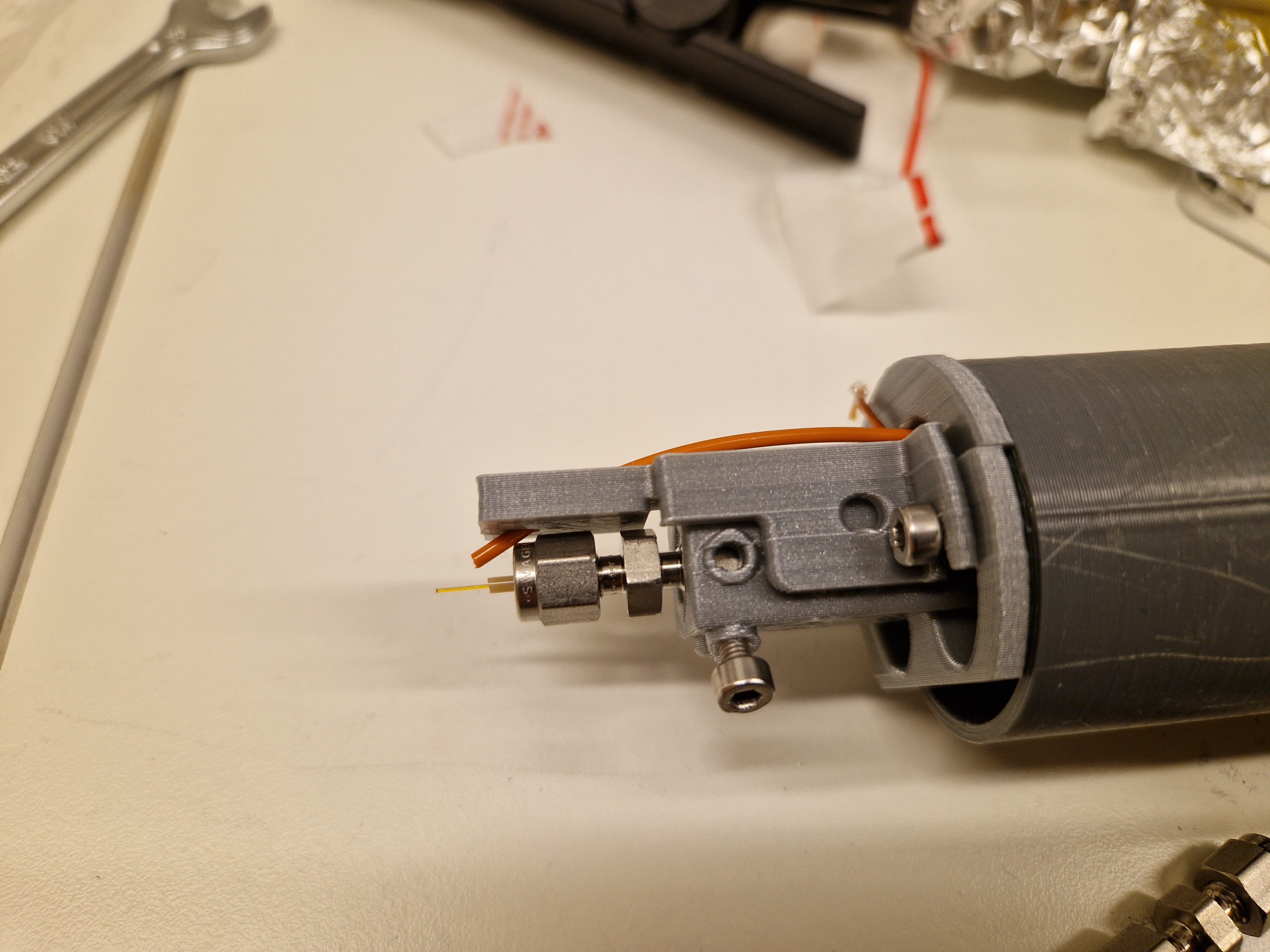
Install 3D printed nozzle holder to the rod
 {width=300px}